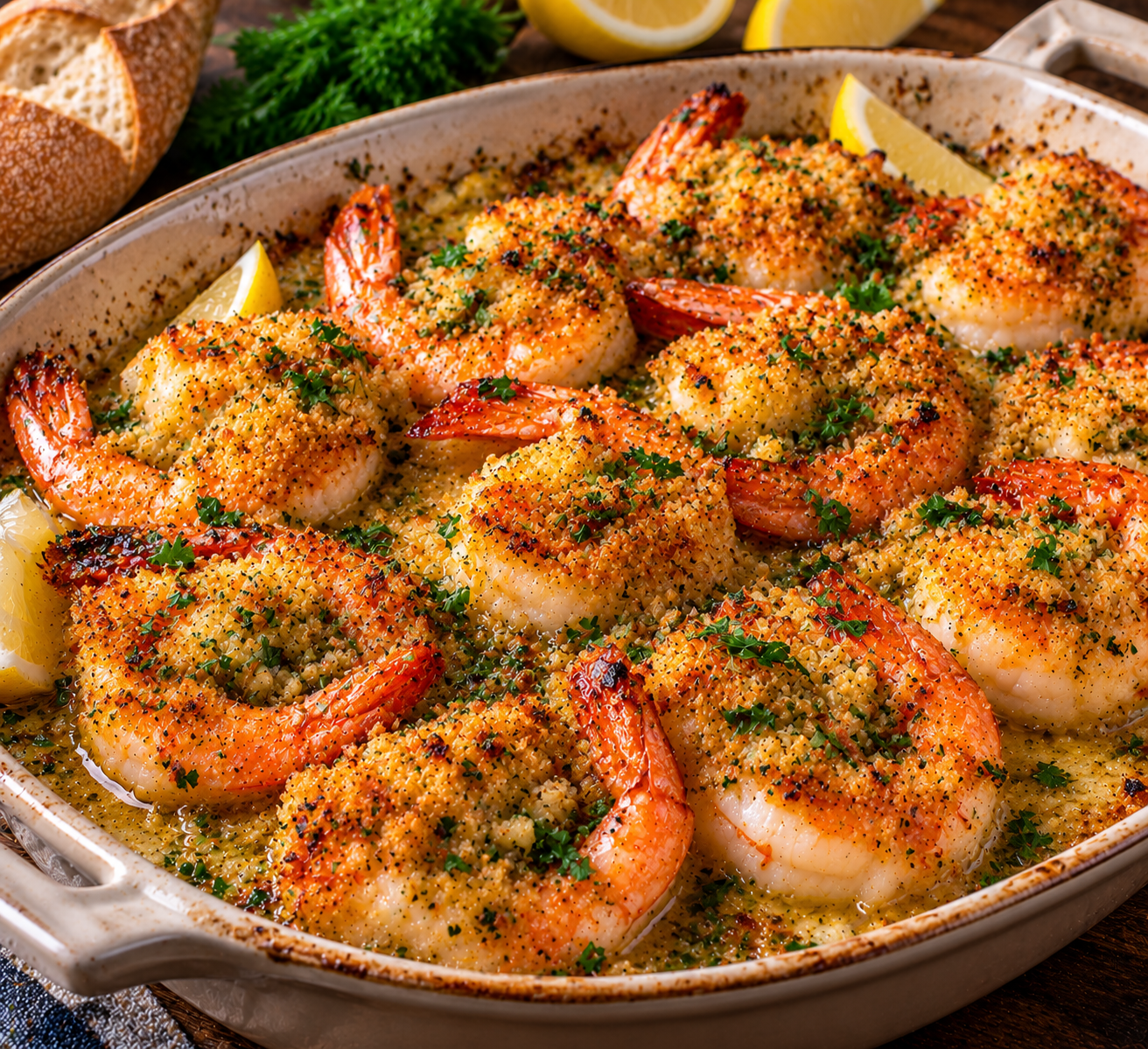
Shrimp De Jonghe is a classic Chicago seafood dish featuring tender, juicy shrimp baked beneath a rich, golden garlic butter breadcrumb topping. Made with fresh shrimp, buttery breadcrumbs, garlic, parsley, paprika, and dry white wine, this comforting baked shrimp recipe delivers restaurant-quality flavor with minimal effort.
The magic of Shrimp De Jonghe comes from its irresistible contrast of textures. The shrimp remain plump and succulent while the breadcrumb topping becomes beautifully golden, buttery, and crisp.
As the dish bakes, melted butter mingles with white wine, garlic, and natural shrimp juices, creating a fragrant sauce at the bottom of the baking dish.
Served hot with fresh lemon wedges and crusty bread, this classic Shrimp De Jonghe recipe is perfect for family dinners, holidays, special occasions, and elegant seafood appetizers.
Recipe Overview
Why You’ll Love This Shrimp De Jonghe Recipe
This classic baked shrimp dish combines simple ingredients with rich, comforting flavors.
Golden, crispy topping: Fresh breadcrumbs and melted butter create a delicious crunchy crust.
Tender, juicy shrimp: Baking keeps the shrimp flavorful when cooked just until done.
Rich garlic butter flavor: Fresh garlic and butter add an irresistible savory aroma.
Elegant presentation: The golden breadcrumb topping looks beautiful in a ceramic baking dish.
Quick preparation: Ready in approximately 30 minutes.
Perfect for entertaining: Serve as an appetizer or main course.
Delicious buttery sauce: White wine, garlic, butter, and shrimp juices create a flavorful sauce for dipping bread.
Ingredients for Shrimp De Jonghe
This recipe makes approximately 4 servings.
For the Shrimp
1½ pounds (680 g) large shrimp, peeled and deveined
¼ cup dry white wine
For the Garlic Butter Breadcrumb Topping
8 tablespoons (½ cup) unsalted butter, softened
1 cup fresh breadcrumbs
3 garlic cloves, finely grated
3 tablespoons fresh parsley, finely chopped
½ teaspoon paprika
½ teaspoon salt
For Serving
Fresh lemon wedges
Additional chopped parsley
Crusty bread, for dipping
How to Make Shrimp De Jonghe
Follow these easy steps to prepare golden, buttery baked shrimp with a crispy garlic herb breadcrumb topping.
Step 1: Preheat the Oven
Preheat your oven to 425°F (220°C).
Choose a shallow ceramic or glass baking dish large enough to arrange the shrimp in a single layer.
A shallow baking dish allows the shrimp to cook evenly while helping the breadcrumb topping become golden and crisp.
Step 2: Prepare the Shrimp
If necessary, peel and devein the shrimp.
You may leave the tails attached for a more elegant presentation or remove them for easier eating.
Rinse briefly if needed and pat the shrimp thoroughly dry with paper towels.
Removing excess moisture helps prevent the dish from becoming watery.
Step 3: Arrange the Shrimp
Place the prepared shrimp in the baking dish.
Arrange them in a single, even layer.
Avoid overcrowding the dish because tightly packed shrimp may cook unevenly.
Step 4: Add the White Wine
Slowly pour ¼ cup dry white wine around the shrimp.
Try to distribute the wine evenly across the bottom of the dish.
The wine will combine with the butter and shrimp juices during baking, creating a flavorful sauce.
A dry white wine such as Sauvignon Blanc or Pinot Grigio works well.
Step 5: Soften the Butter
Place the softened butter in a medium mixing bowl.
The butter should be soft enough to mix easily but not completely melted.
Softened butter helps the breadcrumbs form rich, moist clumps.
Step 6: Prepare the Garlic Butter Crumb Mixture
Add the fresh breadcrumbs, finely grated garlic, chopped parsley, paprika, and salt to the butter.
Using a fork, work the ingredients together until evenly combined.
The mixture should resemble moist, buttery crumbs with small golden clumps.
Step 7: Coat the Shrimp
Spoon the garlic butter breadcrumb mixture generously over the shrimp.
Use your fingers or the back of a spoon to gently press the crumbs onto the surface.
Make sure each shrimp is covered with a generous layer of topping.
Step 8: Bake the Shrimp
Transfer the baking dish to the preheated oven.
Bake uncovered for approximately 12–14 minutes, depending on the size of the shrimp and the depth of the dish.
The topping should become golden brown and crisp.
The butter should bubble gently around the edges.
The shrimp should turn opaque and reach an internal temperature of 145°F (63°C).
Begin checking early because shrimp can overcook quickly.
Step 9: Check the Breadcrumb Crust
Carefully remove the dish from the oven.
The breadcrumb topping should appear golden and lightly toasted.
If the shrimp are fully cooked but the topping needs more color, briefly broil for 30–60 seconds, provided the dish is broiler-safe.
Watch carefully to prevent burning.
Step 10: Garnish with Fresh Parsley
Sprinkle additional chopped parsley over the baked shrimp.
Add fresh lemon wedges around the dish.
The herbs add color and freshness, while lemon helps balance the rich garlic butter.
Step 11: Serve Immediately
Bring the baking dish to the table while hot, placing it on a heat-safe trivet.
Serve the shrimp with warm crusty bread.
Spoon some of the buttery garlic wine sauce over each portion.
Enjoy the combination of juicy shrimp, crispy breadcrumbs, and rich garlic butter.
What Is Shrimp De Jonghe?
Shrimp De Jonghe is a classic American seafood casserole associated with Chicago.
The dish traditionally features shrimp baked with a seasoned breadcrumb and butter mixture containing garlic, herbs, and often sherry or wine.
It is named after the De Jonghe family, whose Chicago restaurant helped popularize the dish around the turn of the 20th century.
Shrimp De Jonghe became a beloved example of Chicago’s historic restaurant cuisine.
The recipe is still enjoyed today because of its simple preparation and rich, comforting flavors.
This version uses dry white wine, fresh breadcrumbs, parsley, paprika, and garlic butter for an easy homemade adaptation.
The History of Shrimp De Jonghe
Shrimp De Jonghe has roots in Chicago’s restaurant history.
The dish is commonly associated with the De Jonghe family’s restaurant, which operated during the late 19th and early 20th centuries.
It became known for its distinctive preparation of shrimp baked beneath a rich, buttery breadcrumb topping.
Traditional versions frequently include sherry, garlic, parsley, and seasoned breadcrumbs.
Over time, home cooks developed variations using white wine, different herbs, and additional seasonings.
Today, Shrimp De Jonghe remains a recognizable Chicago seafood specialty and a popular choice for holiday meals and dinner parties.
The Secret to Perfect Shrimp De Jonghe
The best Shrimp De Jonghe combines juicy shrimp with a crisp, buttery breadcrumb topping.
Use Large Shrimp
Large shrimp hold their texture well during baking.
Pat the Shrimp Dry
Excess moisture can dilute the butter sauce and soften the topping.
Use Softened Butter
Softened butter helps the breadcrumbs form rich clumps.
Choose Fresh Breadcrumbs
Fresh breadcrumbs create a tender, flavorful topping.
Use Fresh Garlic
Freshly grated garlic provides a stronger aroma than garlic powder.
Avoid Too Much Wine
A small amount of wine adds flavor without making the dish watery.
Bake Uncovered
Uncovered baking allows the breadcrumb topping to become golden.
Avoid Overcooking
Shrimp cook quickly and can become rubbery when baked too long.
Serve Immediately
The breadcrumb topping is crispiest when freshly baked.
Why Garlic Butter Is Essential
Garlic butter is the foundation of this classic seafood dish.
Butter provides richness and helps the breadcrumbs toast during baking.
Garlic adds a savory aroma that complements the natural sweetness of shrimp.
Fresh parsley contributes a mild herbal flavor.
Paprika adds color and gentle warmth.
As the butter melts, it combines with the white wine and shrimp juices to create a flavorful sauce.
This sauce is especially delicious when served with crusty bread.
Choosing the Best Shrimp
The quality and size of the shrimp influence the final result.
Large Shrimp
Large shrimp are ideal because they remain plump during baking.
Jumbo Shrimp
Jumbo shrimp create an impressive presentation and may require slightly longer cooking.
Fresh Shrimp
Choose shrimp with a mild, fresh aroma and firm texture.
Frozen Shrimp
Frozen shrimp are convenient and work very well in this recipe.
Thaw them completely in the refrigerator before cooking.
Pat dry thoroughly to remove excess moisture.
Peeled and Deveined Shrimp
Using peeled and deveined shrimp saves preparation time and makes the finished dish easier to eat.
Fresh Breadcrumbs vs. Dried Breadcrumbs
Fresh breadcrumbs are recommended for this recipe.
They absorb softened butter beautifully and create a rich, tender topping that becomes lightly crisp during baking.
Dried breadcrumbs can also be used, but they absorb moisture differently and may produce a denser crust.
Panko breadcrumbs are another option for a lighter, crunchier texture.
For a classic-style Shrimp De Jonghe, fresh breadcrumbs provide a particularly satisfying result.
What Type of Wine Should You Use?
Dry white wine works well in this recipe because it adds acidity and depth.
Good options include Sauvignon Blanc, Pinot Grigio, and other dry white wines.
Avoid very sweet wines because they can change the flavor balance.
Traditional Shrimp De Jonghe recipes often use dry sherry, which adds a distinctive nutty flavor.
For an alcohol-free variation, substitute seafood stock or chicken broth with a small squeeze of lemon juice. The flavor will differ slightly.
What to Serve with Shrimp De Jonghe
This rich baked shrimp dish pairs beautifully with a variety of sides.
Crusty French Bread
Warm crusty bread is perfect for soaking up the garlic butter sauce.
Garlic Butter Pasta
Simple pasta tossed with garlic and olive oil makes a satisfying accompaniment.
Lemon Herb Rice
Fluffy rice seasoned with lemon zest and parsley balances the richness.
Roasted Asparagus
Roasted asparagus adds freshness and a slightly earthy flavor.
Creamy Mashed Potatoes
Mashed potatoes pair beautifully with the buttery sauce.
Steamed Green Beans
Green beans provide a light, nutritious side.
Caesar Salad
A crisp Caesar salad complements the warm shrimp.
Roasted Broccoli
Roasted broccoli adds texture and color.
Parmesan Risotto
Creamy risotto turns the dish into an elegant seafood dinner.
For a complete meal, serve Shrimp De Jonghe with crusty bread, roasted asparagus, and a fresh green salad.
Delicious Shrimp De Jonghe Variations
Classic Sherry Shrimp De Jonghe
Replace the dry white wine with dry sherry for a more traditional flavor.
Lemon Garlic Shrimp De Jonghe
Add fresh lemon zest to the breadcrumb mixture.
Parmesan Shrimp De Jonghe
Mix ¼ cup freshly grated Parmesan into the breadcrumbs.
Spicy Shrimp De Jonghe
Add a pinch of cayenne pepper or crushed red pepper flakes.
Herb Butter Shrimp De Jonghe
Include fresh thyme, chives, or oregano.
Panko Crusted Shrimp De Jonghe
Replace fresh breadcrumbs with panko for extra crunch.
Shrimp De Jonghe with Scallops
Replace some of the shrimp with large sea scallops, adjusting cooking time as needed.
Alcohol-Free Shrimp De Jonghe
Replace the white wine with seafood broth and a little lemon juice.
Common Mistakes to Avoid
Using wet shrimp: Excess moisture can make the topping soggy.
Overcrowding the baking dish: The shrimp may cook unevenly.
Using melted butter instead of softened butter: Melted butter can produce a different crumb texture.
Adding too much wine: Excess liquid can prevent the topping from becoming crisp.
Using too little garlic: Garlic is a defining flavor in this recipe.
Overmixing the breadcrumbs: The topping should remain crumbly rather than becoming a smooth paste.
Covering the baking dish: Covering traps steam and softens the crust.
Overbaking the shrimp: Shrimp can become rubbery when overcooked.
Broiling too long: Breadcrumbs can burn quickly.
Waiting too long to serve: The topping is best enjoyed immediately.
Can I Prepare Shrimp De Jonghe Ahead of Time?
Yes. This dish is convenient for entertaining because several components can be prepared in advance.
Clean and devein the shrimp, then refrigerate them in a covered container.
Prepare the garlic butter breadcrumb mixture separately.
Keep both components refrigerated until ready to cook.
When you’re ready to bake, arrange the shrimp in the dish, add the wine, and cover with the breadcrumb topping.
Bake immediately for the best texture.
Avoid assembling the entire dish too far in advance because moisture can soften the breadcrumbs.
How to Store Leftover Shrimp De Jonghe
Allow the cooked shrimp to cool slightly.
Transfer leftovers to an airtight container.
Refrigerate promptly and consume within 3–4 days.
How to Reheat
Preheat the oven to 325°F (165°C).
Place the shrimp in a shallow baking dish.
Cover loosely with foil to prevent excessive drying.
Warm gently until heated through.
Remove the foil briefly at the end if you want to restore some crispness.
Can You Freeze Shrimp De Jonghe?
Yes, although the breadcrumb topping may lose some of its original texture.
Freeze cooked portions in airtight freezer-safe containers for approximately 2–3 months for best quality.
Thaw overnight in the refrigerator before reheating.
For the best flavor and texture, Shrimp De Jonghe is recommended fresh from the oven.
Frequently Asked Questions
What is Shrimp De Jonghe?
Shrimp De Jonghe is a classic Chicago seafood dish featuring shrimp baked with garlic butter, breadcrumbs, herbs, and wine or sherry.
Where did Shrimp De Jonghe originate?
The dish is associated with Chicago and the historic De Jonghe family’s restaurant.
How long does Shrimp De Jonghe take to bake?
Large shrimp generally bake for approximately 12–14 minutes at 425°F (220°C), depending on size and dish depth.
What temperature should shrimp reach?
Shrimp should reach an internal temperature of 145°F (63°C).
Can I use frozen shrimp?
Yes. Thaw completely in the refrigerator and pat dry before baking.
Can I use panko breadcrumbs?
Yes. Panko creates a lighter, crunchier topping.
Can I replace white wine with sherry?
Absolutely. Dry sherry is commonly used in traditional versions.
Can I make Shrimp De Jonghe without alcohol?
Yes. Replace the wine with seafood broth or chicken broth and a little lemon juice.
Why is my breadcrumb topping soggy?
Excess moisture, too much wine, or covering the baking dish can soften the crumbs.
Can I make this recipe ahead of time?
Yes. Prepare the shrimp and breadcrumb mixture separately, then assemble and bake shortly before serving.
Can I add Parmesan cheese?
Yes. Parmesan adds a savory, slightly salty flavor.
What bread goes best with Shrimp De Jonghe?
French baguette, Italian bread, or another crusty bread is ideal for soaking up the garlic butter sauce.
Final Thoughts
Shrimp De Jonghe with Garlic Butter Breadcrumbs is a classic American seafood dish that combines tender shrimp, rich butter, aromatic garlic, fresh parsley, and a golden breadcrumb topping.
The white wine adds depth to the buttery sauce, while fresh lemon wedges provide a bright finishing touch.
Ready in approximately 30 minutes, this easy baked shrimp recipe is perfect for weeknight dinners, holiday gatherings, romantic meals, and special occasions.
Serve it straight from the oven with warm crusty bread and your favorite vegetables for a comforting, restaurant-style seafood dinner.