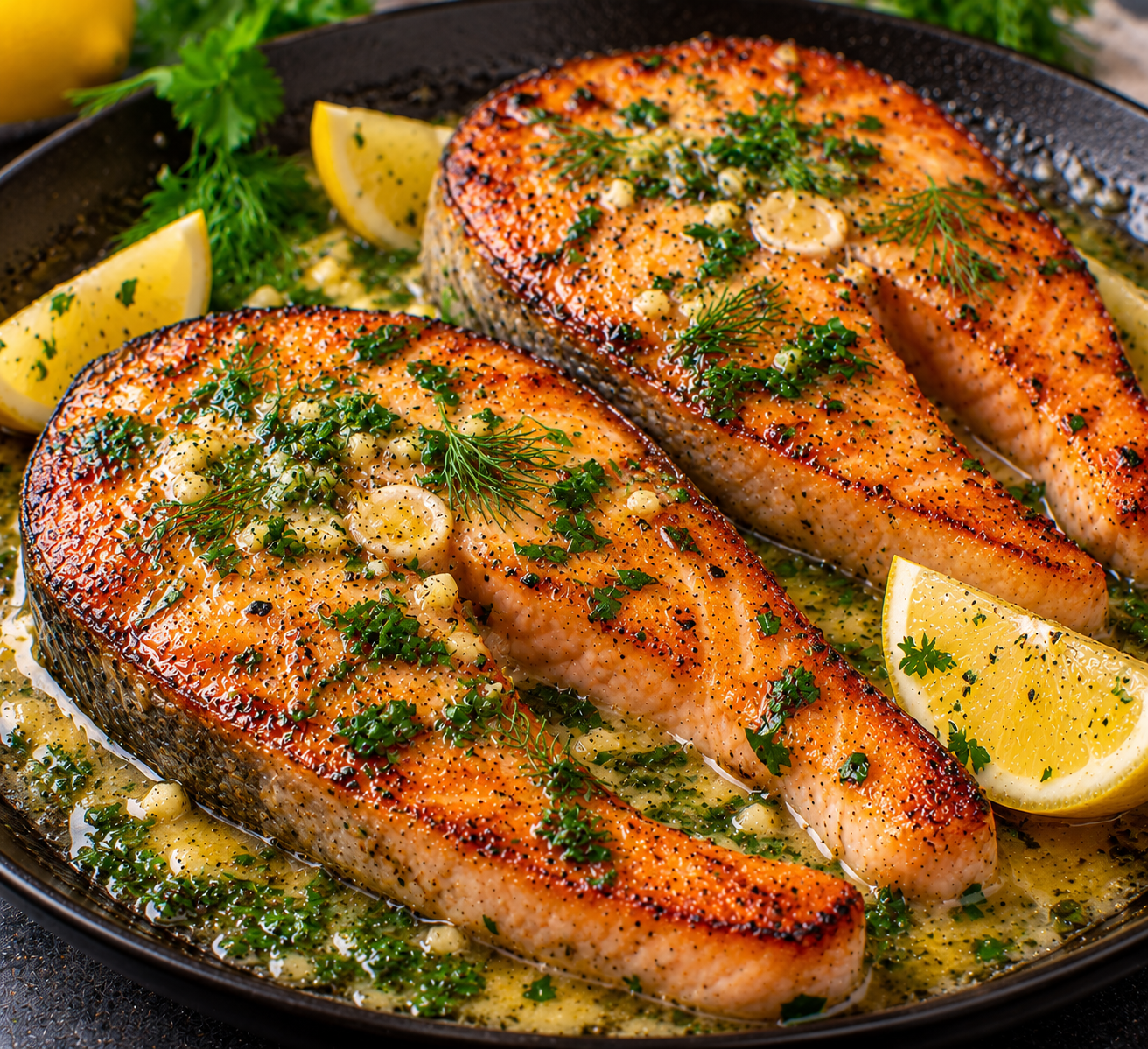
Pan-Seared Salmon Steaks with Lemon Butter and Herbs is a delicious seafood recipe featuring thick, juicy salmon steaks seared until beautifully golden and finished with a rich, glossy lemon butter sauce and fresh aromatic herbs.
This easy salmon dinner combines the natural richness of fresh salmon with creamy melted butter, bright lemon juice, and fragrant parsley and dill. The result is a flavorful, restaurant-style seafood dish that’s crispy and golden on the outside, tender and flaky on the inside, and ready in approximately 20 minutes.
Unlike salmon fillets, salmon steaks are cut crosswise through the fish, giving them their distinctive shape and a central bone. Their thick, meaty texture makes them especially suitable for pan-searing.
Whether you’re preparing a quick weeknight dinner, a romantic meal, or an elegant seafood dish for guests, this Lemon Butter Salmon Steak Recipe delivers impressive flavor with minimal effort.
Recipe Overview
| Detail | Information |
| Prep Time | 5–10 minutes |
| Cook Time | 10–14 minutes |
| Total Time | 15–25 minutes |
| Servings | 2 |
| Difficulty | Easy |
| Cuisine | American-Inspired |
| Cooking Method | Pan-Seared |
| Main Ingredient | Salmon Steaks |
| Recipe Type | Main Course |
Why You’ll Love These Pan-Seared Salmon Steaks
This simple recipe offers everything you want in a delicious homemade seafood dinner.
- Beautiful golden crust: Pan-searing develops a flavorful, lightly crispy exterior.
- Juicy, tender salmon: Thick salmon steaks remain moist when cooked properly.
- Rich lemon butter sauce: Butter and lemon create a silky, flavorful finish.
- Fresh herbal flavor: Parsley and dill complement the natural taste of salmon.
- Quick preparation: Ready in approximately 20 minutes.
- Simple ingredients: Only salmon, butter, lemon, herbs, salt, and pepper.
- Elegant presentation: Golden salmon steaks with glossy butter sauce look beautiful on a dinner plate.
Ingredients for Pan-Seared Salmon Steaks with Lemon Butter and Herbs
This recipe makes 2 servings.
For the Salmon Steaks
- 2 large, thick salmon steaks
- Salt, to taste
- Freshly ground black pepper, to taste
- 1 tablespoon butter, taken from the total amount
For the Lemon Butter Sauce
- 2 tablespoons unsalted butter
- 1 fresh lemon, juiced
For Garnishing
- Fresh parsley, finely chopped
- Fresh dill, finely chopped
- Fresh lemon wedges
- Extra freshly cracked black pepper, optional
How to Make Pan-Seared Salmon Steaks with Lemon Butter and Herbs
Follow these easy steps to prepare perfectly seared salmon steaks with a rich homemade lemon butter sauce.
Step 1: Prepare the Salmon Steaks
Remove the salmon steaks from their packaging.
Check for any loose bones and remove them carefully with fish tweezers if necessary.
Pat both sides thoroughly dry with paper towels.
Removing surface moisture helps the salmon develop a golden crust when it touches the hot skillet.
Choose salmon steaks of similar thickness for even cooking.
Step 2: Season the Salmon
Sprinkle both sides of each salmon steak with salt and freshly ground black pepper.
Season evenly, including the edges.
Salmon has a naturally rich flavor, so simple seasoning is enough to enhance its taste.
Step 3: Heat the Skillet
Place a large, heavy-bottomed skillet over medium-high heat.
Add 1 tablespoon of butter.
Allow the butter to melt and begin foaming.
Reduce the heat slightly if the butter begins to brown too quickly.
A heavy skillet helps distribute heat evenly and encourages a beautiful golden crust.
Step 4: Place the Salmon in the Pan
Carefully lay both salmon steaks into the hot skillet.
Leave enough space between them for even cooking.
Avoid moving the fish immediately after placing it in the pan.
This allows the surface to develop a flavorful seared crust.
Step 5: Sear the First Side
Cook the salmon steaks for approximately 5–6 minutes on the first side, depending on thickness.
The bottom should become golden brown.
Avoid pressing down heavily on the fish, as this can squeeze out moisture.
Step 6: Flip the Salmon Steaks
Using a wide fish spatula, carefully turn each steak.
Cook the second side for approximately 5–6 minutes.
The exterior should become golden while the center turns opaque and flaky.
For food safety, cook salmon until the thickest part reaches an internal temperature of 145°F (63°C), avoiding contact with the central bone when checking.
Step 7: Remove the Salmon
Once cooked, transfer the salmon steaks to a warm plate.
Allow them to rest briefly while preparing the lemon butter sauce.
Keep the flavorful cooking juices in the skillet.
Step 8: Melt the Butter for the Sauce
Reduce the skillet heat to low.
Add the remaining 2 tablespoons of butter.
Allow the butter to melt gently into the pan juices.
Stir or swirl the skillet until the butter becomes glossy.
Step 9: Add Fresh Lemon Juice
Remove the skillet from direct heat.
Squeeze in the fresh lemon juice.
Stir gently to combine the citrus with the melted butter.
The sauce should be bright, buttery, and aromatic.
Step 10: Add Fresh Herbs
Stir a small amount of chopped parsley and dill into the warm sauce.
Reserve the remaining herbs for garnishing.
The herbs add freshness and complement the rich salmon.
Step 11: Baste the Salmon
Return the salmon steaks briefly to the warm skillet if desired.
Spoon the glossy lemon butter sauce over the fish.
Allow the sauce to coat the golden surface.
Avoid cooking the salmon for too long at this stage.
Step 12: Plate and Serve
Carefully transfer the salmon steaks to individual serving plates.
Spoon the remaining lemon butter sauce generously over each steak.
Sprinkle with fresh parsley and dill.
Add lemon wedges and serve immediately.
What Are Salmon Steaks?
Salmon steaks are thick cross-sectional cuts of salmon that typically include the backbone and surrounding flesh.
Unlike salmon fillets, which are cut lengthwise along the fish, salmon steaks have a distinctive rounded or horseshoe-like appearance.
Their thick texture makes them excellent for pan-searing, grilling, and roasting.
Salmon steaks also contain natural fats that contribute to their rich flavor.
When properly cooked, they develop a golden exterior while remaining tender and flaky inside.
Salmon Steaks vs. Salmon Fillets
Although both come from the same fish, salmon steaks and fillets have some differences.
| Feature | Salmon Steaks | Salmon Fillets |
| Cut | Crosswise through the fish | Lengthwise along the fish |
| Shape | Round or horseshoe-shaped | Long, flat portions |
| Bones | Usually contain central bone | Often boneless |
| Texture | Thick and meaty | Tender and flaky |
| Best Methods | Pan-searing, grilling, roasting | Baking, grilling, pan-searing |
| Presentation | Rustic, steak-like | Classic seafood fillet |
Both options are delicious, but salmon steaks are especially attractive for hearty seafood dinners.
The Secret to Perfectly Pan-Seared Salmon Steaks
Several simple techniques help produce golden, juicy salmon.
Choose Thick Salmon Steaks
Thick steaks are easier to sear without drying out too quickly.
Pat the Fish Completely Dry
Excess moisture creates steam and prevents proper browning.
Preheat the Skillet
A properly heated skillet helps create a flavorful crust.
Avoid Moving the Salmon Too Early
Allow the fish to sear before attempting to flip it.
Use a Wide Spatula
Salmon steaks can be delicate around the central bone, so turn them carefully.
Control the Heat
Excessive heat can burn the butter and exterior before the center finishes cooking.
Check the Internal Temperature
A food thermometer helps prevent undercooking or excessive cooking.
Finish with Lemon Butter
Adding the sauce after searing preserves the bright citrus and fresh herbal flavors.
Why Lemon Butter Sauce Is Perfect for Salmon
Lemon butter sauce is one of the most popular accompaniments for salmon.
Butter Adds Richness
Butter enhances salmon’s naturally rich flavor and creates a smooth coating.
Lemon Adds Brightness
Fresh lemon juice balances the buttery richness with refreshing acidity.
Parsley Adds Freshness
Parsley contributes a light herbal flavor and beautiful green color.
Dill Complements Salmon
Dill has a distinctive fresh flavor that pairs especially well with fatty fish.
Together, these ingredients create a balanced sauce that enhances the salmon without overpowering it.
Best Salmon Varieties for Pan-Searing
Several salmon varieties work well for this recipe.
Atlantic Salmon
Atlantic salmon is rich and relatively fatty, making it suitable for pan-searing.
King Salmon
King salmon has a buttery texture and high fat content.
Its thick cuts are excellent for salmon steaks.
Sockeye Salmon
Sockeye salmon has a deep red color and stronger flavor.
Because it is leaner, monitor cooking carefully.
Coho Salmon
Coho salmon offers a milder flavor and tender texture.
Chum Salmon
Chum salmon is generally leaner and benefits from careful cooking and flavorful sauces.
For this recipe, thick Atlantic or king salmon steaks are particularly good options.
How to Keep Salmon Steaks Juicy and Tender
Salmon can become dry when cooked too long.
To maintain moisture, start with thick, evenly sized steaks.
Use medium-high heat for the initial sear, then reduce the temperature if necessary.
Avoid repeatedly flipping the fish.
Check the internal temperature in the thickest portion, away from the bone.
Finish the salmon with warm lemon butter sauce immediately before serving.
These simple steps help produce a tender, flavorful result.
What to Serve with Pan-Seared Salmon Steaks
This easy seafood recipe pairs beautifully with many classic side dishes.
Garlic Butter Rice
Fluffy rice absorbs the delicious lemon butter sauce.
Roasted Asparagus
Tender asparagus complements the richness of the salmon.
Creamy Mashed Potatoes
Mashed potatoes create a comforting and satisfying meal.
Lemon Herb Quinoa
Quinoa with lemon and fresh herbs provides a light accompaniment.
Roasted Baby Potatoes
Golden roasted potatoes add a delicious crispy texture.
Steamed Broccoli
Broccoli is a simple and nutritious vegetable side.
Garlic Green Beans
Tender green beans sautéed with garlic pair naturally with salmon.
Mediterranean Salad
Tomatoes, cucumbers, olives, and fresh greens provide brightness.
Grilled Zucchini
Grilled zucchini complements the golden seared fish.
Buttered Pasta
Simple pasta tossed with butter and parsley makes a satisfying accompaniment.
For a complete dinner, serve the salmon steaks with garlic butter rice, roasted asparagus, and extra lemon wedges.
Delicious Pan-Seared Salmon Steak Variations
Garlic Lemon Butter Salmon Steaks
Add 2–3 minced garlic cloves to the butter sauce.
Spicy Salmon Steaks
Sprinkle paprika and crushed red pepper flakes over the fish before searing.
Cajun Salmon Steaks
Season with Cajun spices for a bold flavor.
Honey Lemon Salmon Steaks
Add a teaspoon of honey to the lemon butter sauce.
Mediterranean Herb Salmon
Use parsley, oregano, thyme, and rosemary.
Dill Butter Salmon
Use extra fresh dill for a stronger herbal flavor.
Brown Butter Salmon Steaks
Allow the butter to turn lightly golden before adding lemon juice.
Garlic Parmesan Salmon
Sprinkle a little grated Parmesan over the cooked salmon.
Chili Lime Salmon
Replace lemon with lime and add chili flakes.
Mustard Herb Salmon
Whisk a teaspoon of Dijon mustard into the lemon butter sauce.
Common Mistakes to Avoid
Not drying the salmon: Excess moisture prevents proper browning.
Using a cold skillet: The salmon may stick and cook unevenly.
Cooking over excessively high heat: Butter can burn before the fish finishes cooking.
Moving the fish too soon: This can prevent a golden crust from forming.
Flipping repeatedly: Salmon steaks may break apart.
Overcooking the fish: Excessive cooking can make the salmon dry.
Not checking for bones: Salmon steaks often contain a central bone.
Adding lemon too early: Prolonged heating can reduce the fresh citrus flavor.
Burning the butter: Burned butter can give the sauce a bitter taste.
Serving too late: Pan-seared salmon is best enjoyed immediately after cooking.
Can I Prepare Salmon Steaks Ahead of Time?
Yes. Several components can be prepared in advance.
Chop the parsley and dill.
Wash and cut the lemon into wedges.
Measure the butter.
Keep the salmon steaks refrigerated until ready to cook.
For the best flavor and texture, season and sear the salmon shortly before serving.
The lemon butter sauce is also best prepared fresh.
How to Store Leftover Salmon Steaks
Allow the cooked salmon to cool slightly.
Transfer leftovers to airtight containers.
Refrigerate within 2 hours of cooking.
Store for 3–4 days.
Keep extra lemon butter sauce separately when possible.
How to Reheat
Preheat the oven to 275°F (135°C).
Place the salmon steaks in a covered baking dish.
Add a small amount of butter or water to prevent drying.
Reheat gently until thoroughly heated to 165°F (74°C).
Avoid overheating, as salmon can become dry.
Can You Freeze Cooked Salmon Steaks?
Yes.
Place cooled salmon steaks in freezer-safe containers.
For best quality, consume within approximately 2–3 months.
Thaw overnight in the refrigerator before reheating.
The texture may be slightly softer after freezing.
Frequently Asked Questions
How long should salmon steaks cook in a skillet?
Thick salmon steaks generally take approximately 10–12 minutes, depending on their thickness.
What temperature should salmon steaks reach?
For food safety, salmon should reach 145°F (63°C) in the thickest part.
Should I remove the bone from salmon steaks before cooking?
No. Salmon steaks can be cooked with the central bone intact. Remove bones carefully when eating.
Can I use frozen salmon steaks?
Yes. Thaw completely in the refrigerator before cooking.
Can I use salmon fillets instead of steaks?
Yes. Adjust the cooking time based on thickness.
How do I prevent salmon from sticking to the skillet?
Use a properly heated skillet and avoid moving the fish before the surface has seared.
Can I use olive oil instead of butter?
Yes. Olive oil can be used for searing, while butter can be reserved for the finishing sauce.
Why is my salmon dry?
The salmon may have been cooked too long or at excessive heat.
Can I add garlic to the lemon butter sauce?
Yes. Fresh minced garlic is a delicious addition.
What herbs go best with salmon?
Parsley, dill, thyme, chives, rosemary, and basil all pair well with salmon.
Can I make this recipe without lemon?
Yes, although lemon provides brightness and balances the richness of the butter.
What sides go best with salmon steaks?
Rice, roasted potatoes, asparagus, broccoli, green beans, pasta, and fresh salads are excellent choices.
Final Thoughts
Pan-Seared Salmon Steaks with Lemon Butter and Herbs is a simple yet elegant seafood recipe that combines thick, juicy salmon steaks with rich melted butter, fresh lemon juice, and aromatic parsley and dill.
The golden seared exterior adds delicious flavor, while the tender salmon remains moist and flaky.
Finished with glossy lemon butter sauce and fresh herbs, this dish offers restaurant-quality presentation without complicated preparation.
Ready in approximately 20 minutes, it’s perfect for weeknight dinners, family meals, or special occasions.
Serve it with roasted vegetables, garlic butter rice, or creamy mashed potatoes for a complete and satisfying seafood dinner.
SEO Information for Your Website
SEO Title
Pan-Seared Salmon Steaks with Lemon Butter and Herbs
Copy
Meta Description
Make juicy pan-seared salmon steaks with a golden crust, rich lemon butter sauce, fresh parsley, and dill. An easy restaurant-style seafood dinner in 20 minutes.
Copy
URL Slug
pan-seared-salmon-steaks-lemon-butter
Copy
Focus Keyword
Pan-Seared Salmon Steaks
Secondary Keywords
Lemon butter salmon steaks, pan-fried salmon steaks, easy salmon steak recipe, salmon steaks with herbs, garlic butter salmon steaks, skillet salmon recipe, juicy salmon steaks, crispy pan-seared salmon, salmon with parsley and dill, restaurant-style salmon dinner.
Image Alt Text
Two thick golden pan-seared salmon steaks topped with glossy lemon butter sauce, fresh chopped parsley and dill, served with lemon wedges on an elegant ceramic plate.
Copy