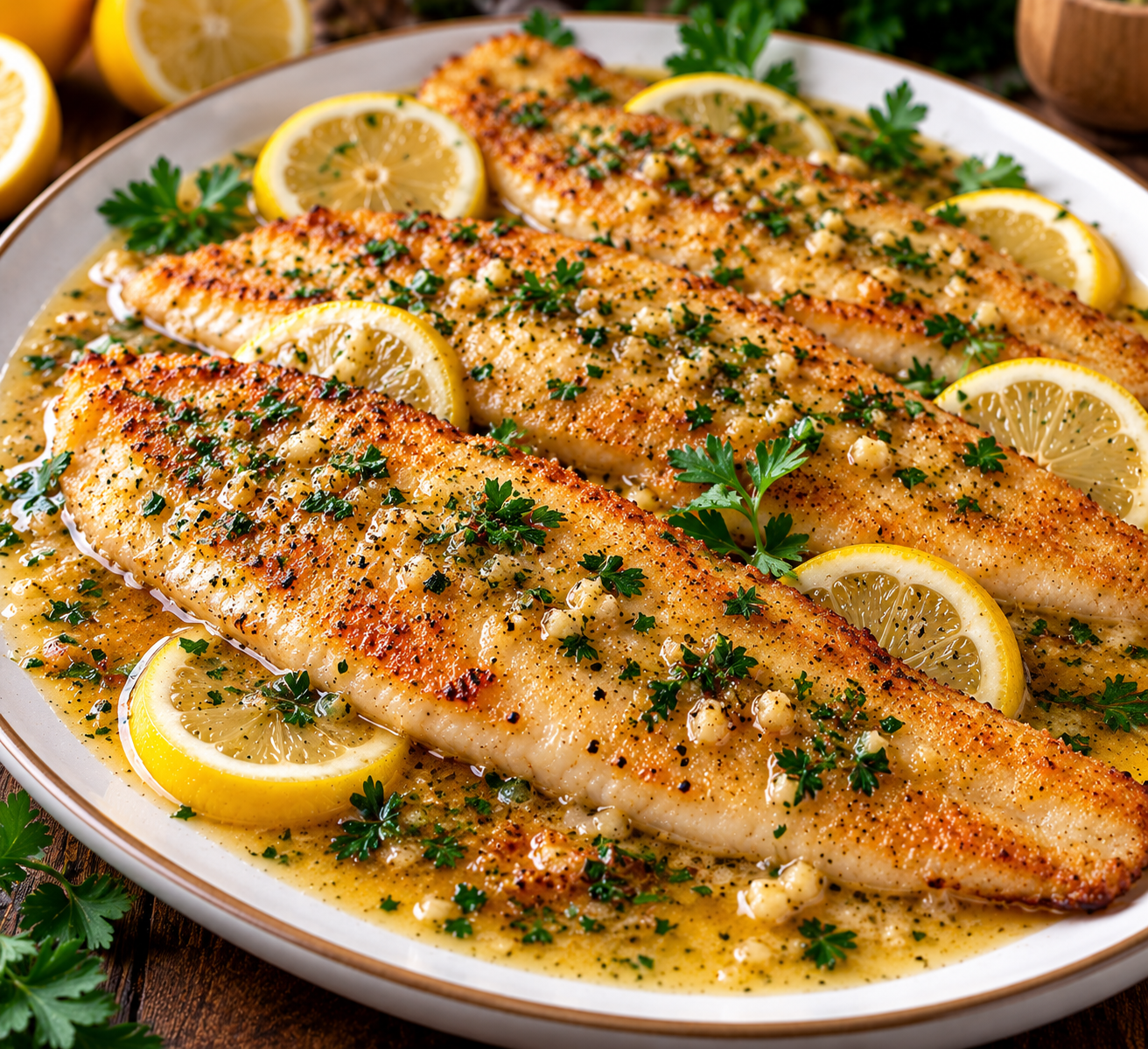
Classic Sole Meunière Recipe – French Pan-Fried Sole with Brown Butter Lemon Sauce
Sole Meunière is a timeless French seafood dish featuring delicate, golden pan-fried sole fillets coated in a light dusting of flour and finished with a rich, nutty brown butter sauce, fresh lemon juice, and fragrant parsley.
This elegant French fish recipe transforms a handful of simple ingredients into an unforgettable restaurant-quality meal. The tender, flaky sole develops a beautiful golden exterior, while the buttery lemon sauce adds richness, freshness, and irresistible flavor.
The beauty of Sole Meunière lies in its simplicity. Instead of relying on complicated ingredients or heavy sauces, this traditional French cooking technique highlights the natural sweetness and delicate texture of fresh sole.
Whether you’re preparing a romantic dinner, entertaining guests, or looking for an easy seafood recipe for a weeknight meal, this classic Sole Meunière recipe is ready in approximately 20 minutes.
Prep Time
10 minutes
Cook Time
10–12 minutes
Total Time
20–22 minutes
Servings
6
Difficulty
Easy to Intermediate
Cuisine
French
Why You’ll Love This Classic Sole Meunière Recipe
Sole Meunière is one of those recipes that proves simple ingredients can create extraordinary flavors.
Delicate and tender fish: Sole has a mild, slightly sweet flavor and fine texture that makes it ideal for quick pan-frying.
Golden, lightly crisp exterior: A thin coating of flour helps the fish develop a beautiful golden crust without overpowering its natural flavor.
Rich brown butter sauce: Butter is gently cooked until golden and nutty, creating a luxurious sauce that complements the fish.
Fresh lemon flavor: Lemon juice balances the richness of the butter and adds a bright, refreshing finish.
Quick and elegant: This recipe is perfect for special occasions but easy enough for a weeknight dinner.
Minimal ingredients: You only need fresh sole, flour, butter, lemon, parsley, and a few simple seasonings.
Ingredients for Sole Meunière
This recipe makes approximately 6 servings.
For the Pan-Fried Sole
6 sole fillets, approximately 1½ pounds (680 g) total
¼ cup all-purpose flour, for light dusting
1 teaspoon salt
1 teaspoon ground white pepper
2 tablespoons neutral oil, such as canola or vegetable oil
For the Brown Butter Lemon Sauce
8 tablespoons (113 g) unsalted butter
¼ cup freshly squeezed lemon juice
2 fresh lemons, thinly sliced
Fresh parsley, finely chopped, for serving
Optional Side Dishes
Steamed baby potatoes
Creamy mashed potatoes
Roasted asparagus
French green beans
Steamed rice
Crusty French bread
How to Make Classic Sole Meunière
Follow these easy step-by-step instructions to prepare golden pan-fried sole with a rich French brown butter lemon sauce.
Step 1: Prepare the Sole Fillets
Place the sole fillets on a clean plate lined with paper towels.
Pat each fillet thoroughly dry to remove excess moisture.
This step is essential because moisture can prevent the fish from developing a beautiful golden exterior.
Check for any remaining bones and remove them carefully.
Step 2: Season the Fish
Sprinkle both sides of the sole fillets evenly with salt and white pepper.
White pepper is traditionally used in many delicate French seafood preparations because it adds subtle warmth without overpowering the fish.
Step 3: Lightly Dust with Flour
Place the all-purpose flour in a shallow dish.
Gently coat each sole fillet with a thin layer of flour.
Shake off any excess.
The flour coating should be light and delicate rather than thick.
This technique helps create the characteristic golden exterior of Sole Meunière.
Step 4: Heat the Skillet
Place a large skillet over medium-high heat.
Add the neutral oil and allow it to heat until shimmering.
Use a skillet large enough to hold the fillets without overcrowding.
If necessary, cook the fish in batches.
Step 5: Pan-Fry the Sole
Carefully place the flour-coated sole fillets into the hot skillet.
Cook for approximately 2–3 minutes on the first side, depending on thickness.
The bottom should become lightly golden.
Using a thin fish spatula, carefully flip the fillets.
Cook for another 2–3 minutes, until the fish is opaque and flakes easily.
For food safety, fish should reach an internal temperature of 145°F (63°C).
Step 6: Remove the Fish
Transfer the cooked sole fillets to a warm serving plate.
Keep them loosely covered while preparing the brown butter sauce.
Because sole is delicate, handle each fillet carefully to prevent breaking.
Step 7: Prepare the Brown Butter
Reduce the heat to medium.
Carefully wipe out any burnt flour particles from the skillet if necessary.
Add the unsalted butter.
Allow it to melt and begin foaming.
Continue cooking gently, swirling the pan occasionally.
As the milk solids begin to toast, the butter will develop a golden amber color and a rich, nutty aroma.
Watch closely because brown butter can burn quickly.
Step 8: Add Fresh Lemon Juice
Once the butter reaches a beautiful golden-brown color, remove the skillet from the heat.
Carefully stir in the freshly squeezed lemon juice.
The mixture may bubble briefly.
Swirl the skillet gently until the lemon juice combines with the warm brown butter.
The result should be a fragrant, buttery sauce with a bright citrus flavor.
Step 9: Baste the Sole
Return the sole briefly to the warm skillet, if desired, or leave it on the serving plate.
Spoon the warm lemon brown butter over each fillet.
Make sure the fish is generously coated with the sauce.
Avoid cooking the fish for too long at this stage.
Step 10: Garnish with Fresh Parsley
Sprinkle freshly chopped parsley over the fish.
Arrange thin lemon slices around the plate.
The fresh parsley adds color and a delicate herbal flavor that complements the butter sauce.
Step 11: Serve Immediately
Serve Sole Meunière while hot.
Spoon any remaining brown butter sauce over the fish.
Pair with steamed potatoes, green beans, roasted asparagus, or crusty French bread.
For an elegant restaurant-style presentation, serve the fish on warm white plates with lemon slices and fresh parsley.
What Is Sole Meunière?
Sole Meunière is a classic French fish preparation traditionally made by lightly coating sole in flour, pan-frying it in butter, and finishing it with browned butter, lemon juice, and parsley.
The word meunière comes from the French word for a miller’s wife, referring to the light flour coating used before cooking.
This simple technique has become one of the most recognizable preparations in French cuisine.
Traditional Sole Meunière is often made with Dover sole, a delicate flatfish prized for its mild flavor and tender flesh.
However, other varieties of sole can also be used successfully.
The dish is celebrated for its elegant simplicity and balance of flavors.
The Secret to Perfect Sole Meunière
The key to exceptional Sole Meunière is using fresh fish, a delicate flour coating, and perfectly browned butter.
Choose Fresh Sole
Fresh sole should have a mild, clean aroma and firm, moist flesh.
Avoid fish with an overly strong odor.
Dry the Fish Thoroughly
Removing moisture helps the flour adhere evenly and encourages browning.
Use Only a Light Coating of Flour
The flour should enhance the fish rather than create a thick crust.
Shake off excess flour before cooking.
Don’t Overcrowd the Pan
Cook the fish in batches if necessary.
Overcrowding lowers the skillet temperature and can cause the fish to steam instead of brown.
Watch the Butter Carefully
Brown butter can turn from golden to burnt very quickly.
Remove it from the heat as soon as it develops a nutty aroma and amber color.
Serve Immediately
Sole Meunière tastes best freshly cooked, while the fish is tender and the sauce is warm.
What Is Brown Butter Sauce?
Brown butter, known in French cooking as beurre noisette, is butter that has been gently heated until its milk solids turn golden brown.
During this process, the butter develops a rich, toasted, nutty aroma.
Unlike ordinary melted butter, brown butter has a deeper flavor that pairs beautifully with seafood, vegetables, pasta, and even desserts.
In Sole Meunière, brown butter is combined with fresh lemon juice to create a classic sauce that is both rich and refreshing.
The acidity of the lemon balances the buttery richness, allowing the delicate flavor of the sole to remain the star of the dish.
How to Make Perfect Brown Butter Every Time
Making brown butter is simple, but timing is important.
Start with unsalted butter in a light-colored saucepan or skillet.
Melt the butter over medium heat.
As it cooks, the butter will begin to foam.
Continue swirling the pan gently.
The foam will gradually subside, revealing golden milk solids at the bottom.
Once the butter turns amber and smells nutty, remove it from the heat immediately.
Add the lemon juice carefully and stir.
For the best results, avoid using very high heat because it increases the risk of burning.
Best Fish for Sole Meunière
Although sole is the traditional choice, several other delicate white fish varieties work well with the meunière cooking technique.
Dover Sole
Dover sole is highly prized for its delicate texture, mild sweetness, and fine flavor.
Lemon Sole
Lemon sole is another excellent option with tender flesh and a subtle flavor.
Flounder
Flounder has a delicate texture and mild taste, making it a practical alternative.
Plaice
Plaice is a popular flatfish that works beautifully with lemon and brown butter.
Tilapia
Tilapia is a widely available alternative that can be prepared using the same basic technique.
Thin Cod Fillets
Thin cod fillets can also work, although they have a slightly firmer texture than sole.
Cooking times should always be adjusted according to fillet thickness.
What to Serve with Sole Meunière
Sole Meunière pairs beautifully with simple side dishes that complement its delicate flavor.
Steamed Baby Potatoes
Tender baby potatoes tossed with butter and parsley are a classic accompaniment.
French Green Beans
Lightly sautéed green beans add freshness and a pleasant crunch.
Creamy Mashed Potatoes
Smooth mashed potatoes absorb the delicious lemon butter sauce.
Roasted Asparagus
Roasted asparagus provides a slightly earthy flavor that balances the richness of the butter.
Steamed Rice
Fluffy rice is an excellent choice for soaking up the brown butter sauce.
Fresh Green Salad
A crisp salad with lemon vinaigrette provides a refreshing contrast.
Crusty French Bread
Warm bread is perfect for enjoying every last spoonful of the flavorful sauce.
For a traditional French-inspired dinner, serve Sole Meunière with steamed potatoes, green beans, and a glass of chilled sparkling water.
Can I Use Frozen Sole Fillets?
Yes. Frozen sole can be used for this recipe.
Thaw the fillets completely in the refrigerator before cooking.
Once thawed, drain any excess liquid and pat the fish thoroughly dry.
Avoid frying frozen sole directly because excess moisture can interfere with browning and cause oil splattering.
Can I Make Sole Meunière Without Flour?
Yes. Although flour is a traditional component of Sole Meunière, you can prepare a flourless variation.
Simply season the sole with salt and white pepper, then pan-sear it in a lightly oiled skillet.
Finish with brown butter, lemon juice, and parsley.
The fish will have a slightly different exterior texture but will still be delicious.
For a gluten-free variation that retains a light coating, use a suitable gluten-free all-purpose flour blend.
Delicious Sole Meunière Variations
Garlic Lemon Sole Meunière
Add 2 finely minced garlic cloves to the brown butter just before adding the lemon juice.
Caper Brown Butter Sole
Stir 1 tablespoon of drained capers into the finished sauce for a salty, tangy flavor.
Herb Butter Sole
Add fresh dill, chives, and parsley to the brown butter sauce.
Mediterranean Sole Meunière
Serve with sautéed cherry tomatoes, olives, and fresh basil.
Almond-Crusted Sole
Add lightly toasted sliced almonds to the brown butter sauce for a French-inspired variation known as sole amandine.
Extra Lemon Sole Meunière
Add a little freshly grated lemon zest for a brighter citrus aroma.
Common Mistakes to Avoid
Using wet fish: Moisture can prevent the flour coating from browning properly.
Adding too much flour: A thick coating can overwhelm the delicate fish.
Using an overcrowded skillet: Too many fillets at once can lower the cooking temperature.
Flipping the fish too early: Allow the underside to become lightly golden before turning.
Overcooking the sole: Sole is delicate and can become dry if cooked too long.
Burning the butter: Brown butter should smell nutty, not burnt.
Adding lemon juice too early: Add it after the butter has browned to preserve the desired nutty flavor.
Serving the dish cold: Sole Meunière is best enjoyed immediately after cooking.
Can I Prepare Sole Meunière Ahead of Time?
Sole Meunière is best prepared fresh because its delicate texture and brown butter sauce are most enjoyable immediately after cooking.
However, several ingredients can be prepared ahead.
You can chop the parsley, slice the lemons, measure the flour, and portion the fish.
Keep the fish refrigerated until ready to cook.
For the best results, dust the sole with flour shortly before frying.
Prepare the brown butter sauce just before serving.
How to Store Leftover Sole Meunière
Allow the cooked fish to cool slightly before placing it in an airtight container.
Refrigerate promptly and consume within 3–4 days.
Store any extra lemon butter sauce separately if possible.
How to Reheat Sole Meunière
Place the fish in a lightly buttered skillet over low heat.
Cover and warm gently until heated through.
Alternatively, reheat in a covered baking dish at approximately 275°F (135°C).
Avoid overheating because sole can become dry and break apart easily.
Can You Freeze Sole Meunière?
Freezing cooked Sole Meunière is possible, but the delicate fish texture may change after thawing.
For the best flavor and texture, enjoy the dish freshly prepared.
Frequently Asked Questions
What does Sole Meunière mean?
Meunière refers to a French cooking method in which fish is lightly coated in flour, pan-fried, and served with butter, lemon, and parsley.
What fish is traditionally used for Sole Meunière?
Dover sole is one of the most traditional and highly regarded choices.
How long does sole take to cook?
Thin sole fillets usually cook in approximately 2–3 minutes per side, depending on thickness.
How do I know when sole is fully cooked?
The fish should be opaque and flake easily. For food safety, it should reach an internal temperature of 145°F (63°C).
Can I use salted butter?
Yes, but reduce the additional salt to prevent the sauce from becoming too salty.
Why is my brown butter too dark?
The butter may have cooked over excessive heat or remained on the heat too long.
Can I substitute lime juice for lemon juice?
Yes, although lemon is the traditional choice and provides the classic flavor.
Is Sole Meunière difficult to make?
No. The technique is straightforward, but it requires careful handling of the delicate fish and close attention when browning the butter.
Can I make Sole Meunière with olive oil?
You can pan-fry the fish in olive oil, but butter is essential for the classic brown butter sauce.
What is the difference between Sole Meunière and fried fish?
Sole Meunière uses a very light flour coating and is traditionally finished with brown butter, lemon, and parsley rather than a thick batter or breadcrumb crust.
Final Thoughts
Classic Sole Meunière with Brown Butter Lemon Sauce is an elegant French seafood recipe that combines delicate pan-fried sole, a light golden crust, rich nutty butter, fresh lemon, and fragrant parsley.
The beauty of this dish lies in its simplicity. With just a few quality ingredients and approximately 20 minutes, you can prepare a restaurant-style seafood dinner at home.
Whether served with steamed potatoes, roasted asparagus, green beans, or crusty French bread, Sole Meunière is a delicious choice for anyone who appreciates classic French cooking.
Serve immediately, spoon over the warm brown butter sauce, and enjoy the delicate flavors of this timeless dish.