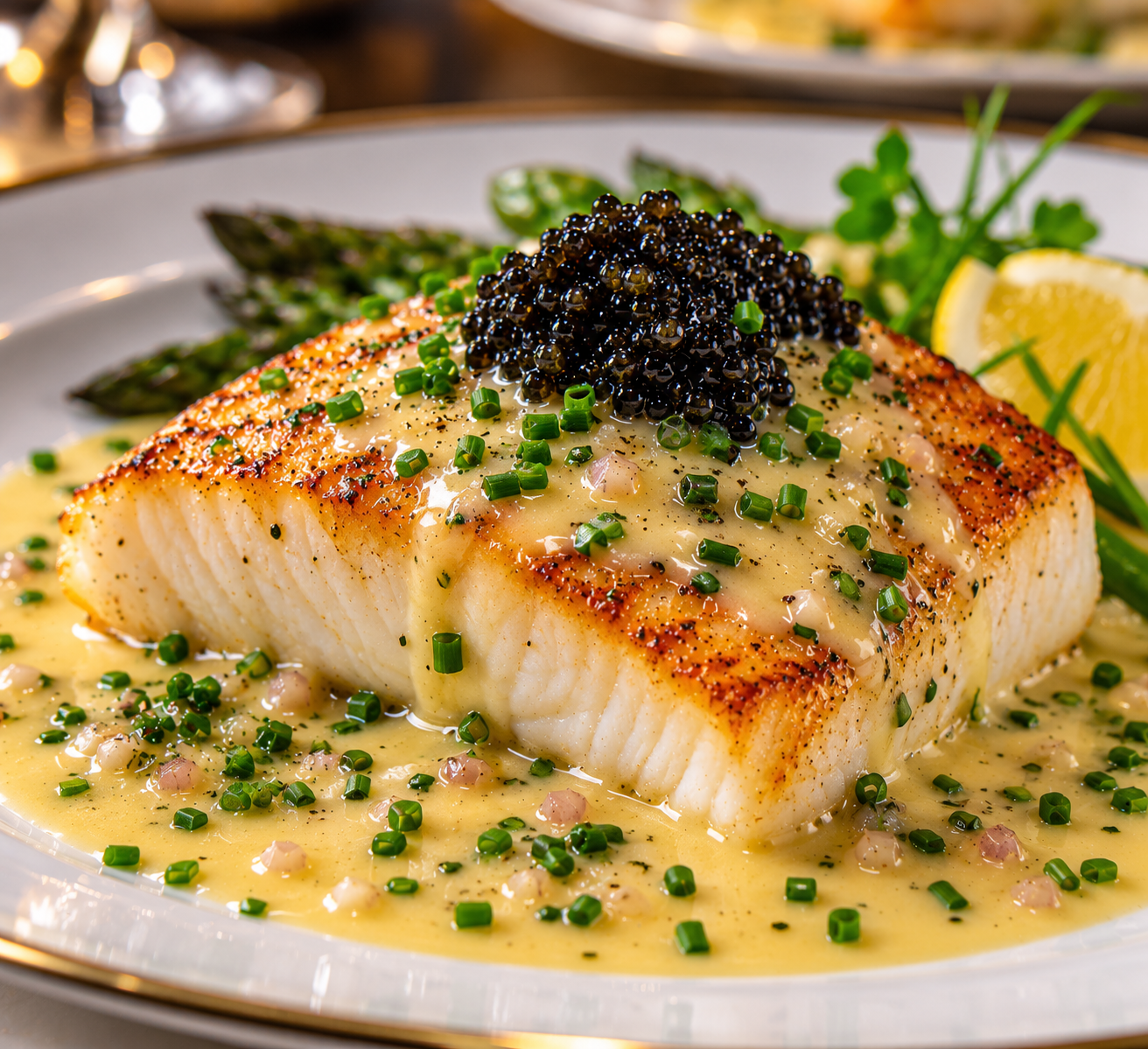
Halibut with Caviar Beurre Blanc is an elegant seafood recipe featuring thick, golden pan-seared halibut fillets served with a silky French white wine butter sauce and finished with luxurious caviar and fresh chives.
This restaurant-style fish dish combines the delicate sweetness of halibut with the rich, velvety texture of beurre blanc. The white wine and shallots provide aromatic depth, fresh lemon juice adds brightness, and caviar delivers a delicate salty finish.
Despite its sophisticated presentation, this recipe can be prepared at home with a few carefully chosen ingredients and simple cooking techniques.
Perfect for romantic dinners, holidays, celebrations, and special occasions, Pan-Seared Halibut with Caviar Beurre Blanc brings the elegance of French-inspired fine dining to your kitchen.
Recipe Overview
| Detail | Information |
| Prep Time | 15 minutes |
| Cook Time | 15–20 minutes |
| Total Time | 30–35 minutes |
| Servings | 4 |
| Difficulty | Intermediate |
| Cuisine | French-Inspired |
| Cooking Method | Pan-Seared |
| Main Ingredient | Halibut |
| Sauce | White Wine Beurre Blanc |
| Recipe Type | Main Course |
Why You’ll Love This Halibut with Caviar Beurre Blanc
This sophisticated seafood recipe is ideal for anyone who appreciates elegant flavors and beautiful presentation.
- Golden pan-seared halibut: A lightly crisp exterior contrasts with tender, flaky white fish.
- Luxurious beurre blanc: A classic French butter sauce creates a silky, rich finish.
- Delicate caviar topping: Caviar adds briny flavor and a beautiful fine-dining presentation.
- Bright lemon flavor: Fresh lemon juice balances the richness of the butter.
- Aromatic shallots: Finely minced shallots provide subtle sweetness and depth.
- Elegant presentation: Golden fish, glossy butter sauce, dark caviar, and fresh chives create an impressive dish.
- Perfect for special occasions: An excellent choice for dinner parties and celebrations.
Ingredients for Halibut with Caviar Beurre Blanc
This recipe makes 4 servings.
For the Pan-Seared Halibut
- 4 thick halibut fillets, approximately 6 ounces (170 g) each
- Salt, to taste
- Freshly ground white pepper, to taste
- 3 tablespoons unsalted butter, for searing
For the Beurre Blanc Sauce
- ½ cup dry white wine
- 1 small shallot, finely minced
- 8 tablespoons cold unsalted butter, cut into small cubes
- 1 tablespoon fresh lemon juice
- Salt, to taste
For Garnishing
- 2 tablespoons caviar
- Fresh chives, finely chopped
How to Make Halibut with Caviar Beurre Blanc
Follow these steps to prepare golden pan-seared halibut with a smooth French butter sauce and elegant caviar topping.
Step 1: Prepare the Halibut Fillets
Remove the halibut fillets from their packaging.
Check for any remaining bones and remove them if necessary.
Pat the fish thoroughly dry using paper towels.
Removing excess moisture helps the halibut develop a golden crust during pan-searing.
Choose fillets of similar thickness for even cooking.
Step 2: Season the Halibut
Sprinkle both sides of the halibut fillets lightly with salt and white pepper.
White pepper provides gentle warmth without overpowering the delicate fish.
Use salt sparingly because the caviar will add saltiness to the finished dish.
Step 3: Heat the Skillet
Place a large, heavy-bottomed skillet over medium-high heat.
Add 3 tablespoons of butter.
Allow the butter to melt and begin foaming.
Adjust the heat if the butter starts to brown too quickly.
Step 4: Sear the Halibut
Carefully place the halibut fillets in the hot skillet.
Leave space between the fillets to promote even browning.
Cook for approximately 4–5 minutes on the first side, depending on thickness.
Avoid moving the fish too early.
The underside should develop a beautiful golden crust.
Step 5: Flip the Fish
Using a wide fish spatula, gently turn each halibut fillet.
Cook for another 4–5 minutes, adjusting the heat as needed.
The exterior should become golden while the flesh turns opaque and flaky.
For food safety, the thickest part should reach an internal temperature of 145°F (63°C).
Step 6: Rest the Halibut
Transfer the cooked fillets to a warm plate.
Allow them to rest briefly while preparing the sauce.
Cover loosely if necessary, but avoid trapping excessive steam that could soften the seared surface.
Step 7: Prepare the Shallots
Peel the shallot and mince it very finely.
Small, evenly sized pieces release their flavor into the wine reduction and create a more delicate sauce texture.
Step 8: Reduce the White Wine
Place a small saucepan over medium heat.
Add ½ cup dry white wine and the minced shallot.
Bring to a gentle simmer.
Cook until the liquid reduces to approximately 2 tablespoons.
The reduction concentrates the wine’s acidity and the shallot’s aromatic flavor.
Step 9: Lower the Heat
Reduce the heat to very low or briefly remove the saucepan from the burner.
The wine reduction should be warm but not boiling vigorously.
Controlling the temperature is essential for creating a smooth beurre blanc.
Step 10: Whisk in the Cold Butter
Add one cube of cold butter to the wine reduction.
Whisk continuously until it is nearly incorporated.
Continue adding the remaining cold butter one cube at a time.
Maintain gentle heat and whisk steadily.
The sauce should gradually become thick, silky, and glossy.
Avoid boiling after adding the butter because excessive heat can cause the emulsion to separate.
Step 11: Add the Lemon Juice
Once the butter is fully incorporated, whisk in 1 tablespoon of fresh lemon juice.
Taste the sauce.
Add a small amount of salt only if needed.
Remember that the caviar will contribute additional saltiness.
Step 12: Keep the Sauce Warm
Remove the finished beurre blanc from direct heat.
Keep it gently warm until serving.
Do not allow it to boil or sit over high heat.
For the best texture, serve the sauce shortly after preparing it.
Step 13: Plate the Halibut
Place one golden halibut fillet in the center of each warm serving plate.
Choose plates with enough space for the sauce to pool naturally around the fish.
Step 14: Spoon Over the Beurre Blanc
Using a spoon, drizzle the warm beurre blanc generously over and around the halibut.
Allow the sauce to form glossy pools around the fish.
The pale butter sauce should contrast beautifully with the golden seared surface.
Step 15: Add the Caviar
Using a small nonreactive spoon, place approximately ½ tablespoon of caviar on top of each fillet.
Avoid heating the caviar directly.
Adding it just before serving helps preserve its delicate texture and flavor.
Step 16: Finish with Chives
Sprinkle finely chopped fresh chives over the fish and sauce.
The bright green herbs provide freshness and a beautiful visual contrast.
Serve immediately while the halibut is warm and the beurre blanc remains silky.
What Is Halibut with Caviar Beurre Blanc?
Halibut with Caviar Beurre Blanc is a French-inspired seafood dish combining pan-seared white fish with a classic emulsified butter sauce and a caviar garnish.
Halibut is prized for its firm texture, mild flavor, and delicate sweetness.
Beurre blanc is a traditional French sauce made by reducing wine or vinegar with shallots and gradually whisking in cold butter.
The result is a smooth, rich sauce with a balanced acidic flavor.
Caviar adds briny complexity and a luxurious finishing touch.
Together, these ingredients create a refined seafood dish suitable for fine-dining presentations.
What Is Beurre Blanc Sauce?
Beurre blanc, meaning “white butter” in French, is a classic emulsified butter sauce.
It is traditionally prepared using a reduction of white wine, vinegar, and shallots, followed by the gradual addition of cold butter.
Unlike sauces thickened with flour or cornstarch, beurre blanc gets its silky consistency from an emulsion of butterfat and liquid.
The sauce is rich yet balanced by acidity.
It is commonly served with fish, shellfish, and delicate seafood preparations.
Why Cold Butter Is Important
Cold butter melts gradually when whisked into the warm wine reduction.
This controlled process helps the fat disperse into the liquid, creating a smooth emulsion.
If the sauce becomes too hot, the butterfat can separate.
Why White Wine Matters
Dry white wine contributes acidity and subtle fruity notes.
Reducing it concentrates the flavor and creates a balanced foundation for the butter.
Why Shallots Are Used
Shallots have a delicate onion-like flavor that complements butter and seafood without overpowering them.
Why Halibut Is Perfect for Beurre Blanc
Halibut is particularly well suited to rich butter sauces.
Mild, Delicate Flavor
Halibut has a clean, slightly sweet flavor that allows the sauce to shine.
Firm Texture
Its dense flesh holds together well during pan-searing.
Beautiful White Flesh
The pearly white interior contrasts with the golden exterior and pale butter sauce.
Elegant Presentation
Thick halibut fillets look impressive when plated individually.
Versatility
Halibut pairs beautifully with lemon, wine, butter, herbs, and seafood garnishes.
How to Make Perfect Beurre Blanc Without Breaking the Sauce
Creating a stable beurre blanc requires careful temperature control.
Reduce the Wine First
Allow the wine and shallots to reduce before adding butter.
Use Very Cold Butter
Keep the butter refrigerated until ready to use.
Cut Butter into Small Cubes
Small cubes incorporate more evenly.
Lower the Heat
The sauce should be warm but not boiling.
Add Butter Gradually
Whisk in one or two cubes at a time.
Whisk Continuously
Steady whisking helps maintain a smooth emulsion.
Avoid Boiling
High heat can cause the sauce to separate.
Serve Fresh
Beurre blanc is best served shortly after preparation.
If the sauce begins to separate, remove it from the heat and whisk in a teaspoon of cold water. This may help restore the emulsion.
Choosing the Best Caviar for Halibut
Caviar is an important finishing ingredient in this recipe.
Sturgeon Caviar
Traditional sturgeon caviar offers a delicate, briny flavor and luxurious texture.
Ossetra Caviar
Ossetra is known for its complex, often nutty flavor.
Kaluga Hybrid Caviar
Kaluga hybrid caviar is appreciated for its large pearls and rich taste.
Siberian Sturgeon Caviar
Siberian sturgeon caviar can provide a balanced, clean flavor suitable for seafood dishes.
Affordable Alternatives
Salmon roe or trout roe can be used for a different presentation and flavor.
These are fish roe alternatives rather than traditional sturgeon caviar.
Serving Tip
Keep caviar properly refrigerated until serving.
Add it to the finished dish immediately before eating to preserve its texture.
Best White Wine for Beurre Blanc
A dry white wine works best for this sauce.
Sauvignon Blanc
Provides bright acidity and citrus notes.
Pinot Grigio
Offers a clean, light flavor.
Unoaked Chardonnay
Adds subtle fruitiness without strong oak flavors.
Muscadet
A crisp French white wine that pairs beautifully with seafood.
Dry Vermouth
Can be used as an aromatic alternative in smaller quantities.
Avoid very sweet wines because they may overpower the delicate halibut.
What to Serve with Halibut with Caviar Beurre Blanc
This elegant seafood dish pairs best with side dishes that complement the rich butter sauce.
Creamy Mashed Potatoes
Smooth mashed potatoes absorb the silky beurre blanc.
Roasted Asparagus
Tender asparagus adds freshness and color.
Lemon Herb Risotto
Creamy risotto creates a luxurious restaurant-style meal.
Steamed Green Beans
Simple green beans balance the richness of the sauce.
Buttered Baby Potatoes
Tender potatoes are a classic accompaniment for fish and butter sauces.
Sautéed Spinach
Spinach with a little garlic and olive oil provides a light side.
Creamy Polenta
Soft polenta pairs beautifully with the delicate fish.
Roasted Fennel
Roasted fennel adds subtle sweetness and aromatic flavor.
Wild Rice
Wild rice provides a slightly nutty contrast.
Fresh Green Salad
A light salad with lemon vinaigrette balances the buttery sauce.
For an elegant dinner, serve the halibut with creamy mashed potatoes, roasted asparagus, and a small amount of additional beurre blanc.
Delicious Halibut with Beurre Blanc Variations
Lemon Caper Beurre Blanc
Add a tablespoon of drained capers to the finished sauce.
Champagne Beurre Blanc
Replace the white wine with dry Champagne or another dry sparkling wine.
Herb Beurre Blanc
Stir chopped parsley, chives, and tarragon into the sauce.
Garlic Beurre Blanc
Add one finely minced garlic clove to the wine reduction.
Saffron Beurre Blanc
Infuse a small pinch of saffron into the wine reduction.
Citrus Beurre Blanc
Add a little orange zest for a brighter flavor.
Halibut with Salmon Roe
Replace the caviar with salmon roe for a colorful variation.
Seared Sea Bass with Beurre Blanc
Use thick sea bass fillets instead of halibut.
Cod with White Wine Butter Sauce
Replace halibut with thick cod fillets.
Halibut with Truffle Beurre Blanc
Add a small amount of truffle to the finished sauce for an earthy variation.
Common Mistakes to Avoid
Not drying the halibut: Excess moisture prevents proper browning.
Using a cold skillet: The fish may stick and cook unevenly.
Cooking over excessive heat: Butter can burn before the fish finishes cooking.
Moving the fish too early: This can prevent a golden crust from developing.
Overcooking the halibut: Lean halibut can become dry.
Using warm butter for beurre blanc: Cold butter helps create a stable emulsion.
Adding butter too quickly: This can prevent proper emulsification.
Boiling the finished sauce: Excessive heat can cause separation.
Adding too much salt: Caviar already contributes saltiness.
Heating the caviar: High heat can damage its delicate texture.
Preparing the sauce too early: Beurre blanc is best served fresh.
Can I Prepare Halibut with Caviar Beurre Blanc Ahead of Time?
Some components can be prepared in advance.
Cut the butter into small cubes and refrigerate.
Finely mince the shallot.
Chop the chives.
Portion the halibut and keep it refrigerated.
The wine and shallot reduction can also be prepared ahead and gently reheated before adding the cold butter.
For the best results, pan-sear the halibut and finish the beurre blanc shortly before serving.
Keep the caviar chilled until the final plating.
How to Store Leftover Halibut
Transfer cooked halibut to an airtight container.
Refrigerate within 2 hours of cooking.
Store for 3–4 days.
Keep the sauce separately when possible.
How to Reheat Halibut
Preheat the oven to 275°F (135°C).
Place the halibut in a covered baking dish with a little water or butter.
Warm gently until the leftovers reach 165°F (74°C).
Avoid overheating, as the fish can become dry.
Can You Reheat Beurre Blanc?
Beurre blanc is delicate and may separate when reheated.
Warm it very gently over low heat while whisking continuously.
Avoid boiling.
For the best texture, prepare a fresh sauce when possible.
Can You Freeze Halibut with Beurre Blanc?
Cooked halibut can be frozen, but beurre blanc does not freeze and reheat particularly well.
Freeze the fish separately in airtight freezer-safe containers.
For best quality, use within approximately 2–3 months.
Prepare fresh beurre blanc and add fresh caviar when serving.
Frequently Asked Questions
What is Halibut with Caviar Beurre Blanc?
It is a seafood dish featuring pan-seared halibut topped with French white wine butter sauce and caviar.
What does beurre blanc mean?
Beurre blanc means “white butter” in French.
What is beurre blanc made from?
It is traditionally made with white wine or vinegar, shallots, and cold butter.
How long should halibut cook in a skillet?
Thick halibut fillets generally take approximately 8–10 minutes, depending on thickness.
What temperature should halibut reach?
For food safety, halibut should reach 145°F (63°C) in the thickest part.
Can I use frozen halibut?
Yes. Thaw completely in the refrigerator and pat dry before cooking.
Can I make beurre blanc without wine?
Yes. Use a small amount of seafood stock with lemon juice or white wine vinegar for acidity, although the flavor will differ.
Why did my beurre blanc separate?
The sauce may have become too hot, or the butter may have been added too quickly.
Can I use salted butter?
Yes, but unsalted butter gives better control over seasoning, especially when using caviar.
Can I substitute salmon roe for caviar?
Yes. Salmon roe provides a colorful, briny alternative.
Should caviar be cooked?
No. Add it just before serving to preserve its delicate texture.
What sides go best with this dish?
Mashed potatoes, risotto, asparagus, green beans, roasted fennel, and creamy polenta are excellent choices.
Final Thoughts
Halibut with Caviar Beurre Blanc is an elegant French-inspired seafood recipe that combines golden pan-seared halibut with a rich, silky white wine butter sauce and delicate caviar.
The mild, tender halibut provides the perfect foundation for the luxurious beurre blanc, while lemon juice and shallots add brightness and depth.
Finished with caviar and fresh chives, this dish offers a beautiful fine-dining presentation that is ideal for romantic dinners, celebrations, and special occasions.
With careful attention to cooking temperature and sauce preparation, you can create an impressive restaurant-style seafood meal at home.
Serve with creamy mashed potatoes, roasted asparagus, or lemon herb risotto for a memorable dinner.
SEO Information for Your Website
SEO Title
Halibut with Caviar Beurre Blanc – Elegant Seafood Recipe
Copy
Meta Description
Make elegant Halibut with Caviar Beurre Blanc! Golden pan-seared halibut topped with silky French white wine butter sauce, luxurious caviar, and fresh chives.
Copy
URL Slug
halibut-caviar-beurre-blanc
Copy
Focus Keyword
Halibut with Caviar Beurre Blanc
Secondary Keywords
Pan-seared halibut, caviar beurre blanc, halibut with white wine butter sauce, French halibut recipe, elegant seafood dinner, halibut with caviar, classic beurre blanc sauce, restaurant-style halibut, lemon butter halibut, fine dining fish recipe.
Image Alt Text
Golden pan-seared halibut fillets served with silky white wine beurre blanc sauce, topped with luxurious black caviar and finely chopped fresh chives on elegant white plates.
Copy